
Featured Stories
Syracuse USD 494 teacher helps her students bring lesser-known Revolutionary War figures to life
Jun 18, 2026
by Angela Deines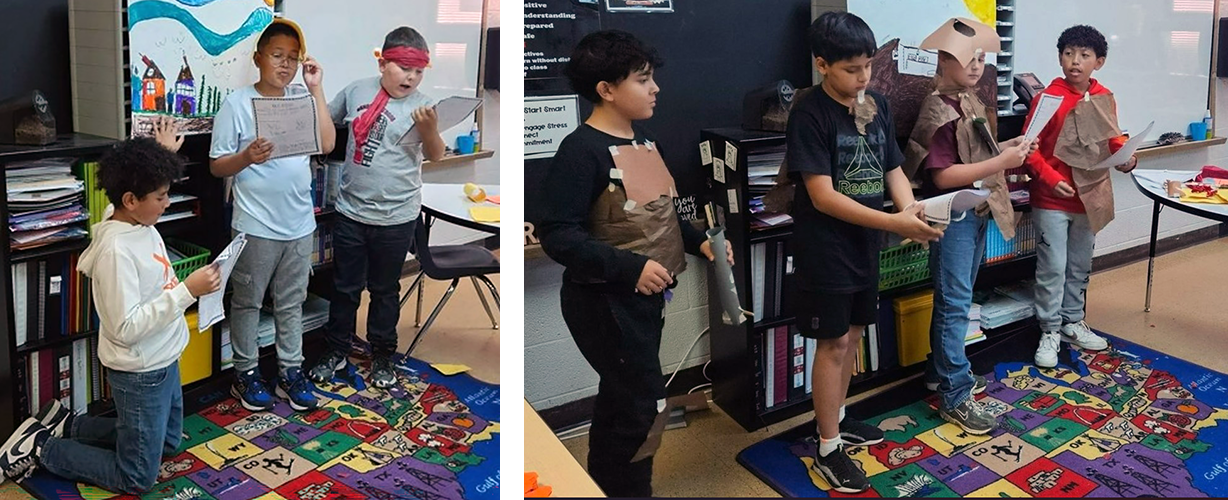
While attending the National Council for History Education (NCHE) conference earlier this year in Montgomery, Alabama, Katrina Neubrandt was reminded there are lesser-known figures from the Revolutionary War whose stories need to be told.
“I wanted my students to understand that history is made up of many different perspectives and that there is often more than one side to a story,” said Neubrandt, a veteran teacher of 23 years. “I have always loved teaching history and helping students see that history is more than dates and famous names.”
The fourth-grade teacher at Syracuse Elementary, Syracuse USD 494, then came up with the idea for her students to create skits to illustrate the lives of those who played significant roles in the Revolutionary War - but didn’t have recognizable names - as a way to celebrate the Declaration of Independence’s 250th anniversary.
“I hoped that they would not only learn the facts but also think about history through the eyes of the people who lived it,” Neubrandt said, adding that her students created costumes, props and came up with dramatic presentations that helped each other connect to the historical people they had studied.
“It was rewarding to see them gain confidence, collaborate with classmates, and realize that history is made up of real people with real stories,” she said. “They took pride in their work and were excited to teach others about the people they had researched.”
One such figure students wanted to learn more about was Dr. Joseph Warren, a physician who was killed by British forces a week after his 34th birthday, a little more than a year before the Declaration of Independence was signed in 1776. According to the National Park Service’s website, Warren operated a smallpox inoculation clinic in Boston in his early 20’s. But beyond being a very young physician, he was also a writer, military strategist and fought in the trenches against the British. He was killed in battle and Paul Revere later identified his remains.
“They were fascinated by who he was and how significant his role was in the American Revolution, even though many had never heard of him before,” Neubrandt said. “When students leave a lesson wanting to know more, asking questions, and seeking out new information, that is when I know meaningful learning has taken place.”
While she has taught several younger grades, Neubrandt said the fourth grade is special because that’s when they begin to think more deeply about history.
“(They) ask thoughtful questions and become more independent learners,” she said. “It is exciting to watch them make connections and develop a genuine curiosity about the world around them.”
